My first video game soundtrack
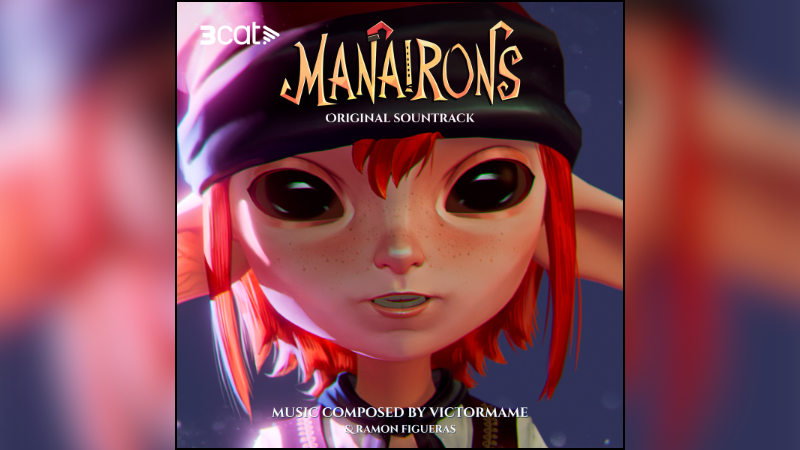
Manairons, the beginning of a new adventure

First Steps: How It All Began
Almost a year ago, on February 26, 2025, I had a meeting with José Antonio Andújar—better known as "Jandu"—from the company Jandusoft. They were looking for a composer for a new video game co-produced by 3cat that was already underway.
I have to confess, I was a little intimidated.
I had never worked as a video game composer before, and my portfolio and experience were limited. If you searched for my name on Spotify, you would basically find solo piano compositions or albums of video game, anime, and movie covers. Nothing suggested I could carry an entire original soundtrack.
And yet, the meeting went well.
Both Jandu and Víctor Amorós, one of the game's creators, were convinced by my addition to the project.
How Did I Convince Them?
Years earlier, I had been "tinkering" publicly with orchestral composition. I would show my mockups on Twitch and post them timidly on X (back when it was still Twitter), sharing small unfinished snippets and practicing everything I was learning in online film scoring courses.
During one stage of my life, I was investing 7 or 8 hours a day into composing and learning the craft.
I had about 10–12 pieces more or less finished. Unmixed. Unreleased. No strategy. Just creative necessity and excitement.
That period ended, and I never published those works anywhere relevant. I just left them on a semi-hidden SoundCloud page "just in case I ever needed them."
And that day arrived.
During the meeting, when I heard:
"I saw you only compose for piano on Spotify..."
I pulled out that nearly forgotten SoundCloud as my portfolio.
Those compositions—written without a commission, without pressure, and without expectations—were the key to landing my first job as a game composer.
Lesson learned:
Nothing you create with honesty is a waste of time. Sometimes it’s just waiting for the right context.
What Now?
Once I confirmed I would be working with the Jandusoft team, I met Ivet Macias, the art director, and Víctor Amorós, the game designer. They presented the GDD to me: the game's bible.
The GDD is the document that defines mechanics, story, characters, art, pacing, tone... and sound.
That’s when I finally grasped a key concept I’d heard a thousand times:
Game music is narrative. I had to think of the music not as independent pieces, but as part of the game design itself.
In that phase, we shared references:
The aesthetic of Tim Burton movies and Danny Elfman's music
The Lost in Random soundtrack composed by Blake Robinson
Games like Little Nightmares and Fran Bow
Dark. Fantastic. Delicate. Childlike yet unsettling.
With all this, I created a playlist of music that represented that soundscape and spent weeks soaking it in before writing a single note.
That active listening process was fundamental.
Not to copy.
But to understand the language.
The Magic Flute Challenge
Nairol (or Nai), the protagonist Manairó, carried a magic flute. With it, he could fight and solve puzzles. By playing certain combinations of notes, the player unlocked abilities like levitation or super-strength.
This led to one of the most interesting challenges of the project:
I had to write melodies that didn't just sound good, but that the player could actually play and remember.
Not just pretty.
Not just atmospheric.
But memorable, playable, and clear.
They had to be:
Simple enough for the player to memorize.
Musically consistent with the game's universe.
Distinct from one another.
And emotionally associated with each power.
It was a fascinating exercise in musical synthesis: reducing composition to its essence, achieving a functional and memorable result with few instruments and few notes. For a moment, I felt like Koji Kondo in The Legend of Zelda: Ocarina of Time... then I woke up... and I was still in my studio.
I also realized something else:
In video games, and in many other aspects of life, less is more. I had to strip away layers and keep only the essentials. I didn't need to write more; I needed to write better. Clearer. More direct.
What I Learned from My First OST
Composing for Manairons has taught me that:
Communication with the team is just as important as the music.
The music must adapt to the pace of the game, not the composer's ego.
Technical limitations can be creative allies.
And above all: narrative is king.
It also forced me to level up my production, mixing, and orchestral mockups. It’s not enough to have a good idea; you have to know how to present it convincingly.
It was demanding.
It was intense.
It was deeply rewarding.
The Beginning of Something More
Manairons wasn't just my first video game soundtrack.
It was a turning point.
For years I had been in an intermediate space: pianist, content creator, arranger, soundtrack lover...
This project helped me define myself clearly:
I am a composer for audiovisual media.
And I want to keep building worlds through music.
If you are developing a video game or an audiovisual project, or if you want to tell a story through sound, I would love to hear it.
Because sometimes, it all starts with a meeting... and a forgotten SoundCloud.
Comments
No comments yet. Be the first to comment!