Boss Music in Manairons
How a boss battle's score evolves through its phases


In many video games, the boss fight is one of the most memorable moments. This isn't just because of the difficulty or the enemy's design, but also because of the music that accompanies the combat.
Boss music serves a clear purpose: to heighten tension and mirror the battle's evolution.
In the recently released video game Manairons, for which I had the pleasure of composing the soundtrack, each level culminates in a confrontation with the town's shop owners. Due to the overproduction caused by the Manairons, these characters have been corrupted and transformed into extravagant human-machines.
Each of these bosses has their own personality, and the music attempts to reflect this through the instrumentation, rhythm, and character of each theme.
A 3-Phase System
To reinforce the sense of progression, each fight is divided into three phases, and each musical theme also features three distinct loops.
When you defeat the first phase of a boss, the music makes a short transition into the next loop. The same occurs upon overcoming the second phase, at which point the music moves into the third musical block.
In some cases, the three phases use the same musical material with different levels of instrumentation and dynamics, progressively increasing the battle's intensity. In other cases, the phase change introduces a new musical section, causing the piece to evolve structurally as the fight advances.
Phase 1
Introduces the enemy's character. The instrumentation is lighter and the main motif is introduced.
Phase 2
The battle intensifies. New instruments appear, rhythmic density increases, and the musical ideas are developed.
Phase 3
The most intense moment of the combat. The orchestra sounds fuller, the rhythms are more aggressive, and in some cases, more electronic elements are added to provide greater sonic complexity.
The Bosses of Manairons
Below, I share some of the game's bosses and the musical concept behind each of them:
The Mecha-Rooster (Mecagallo)
Description: First boss. A mechanical rooster piloted by a manairó.
Design
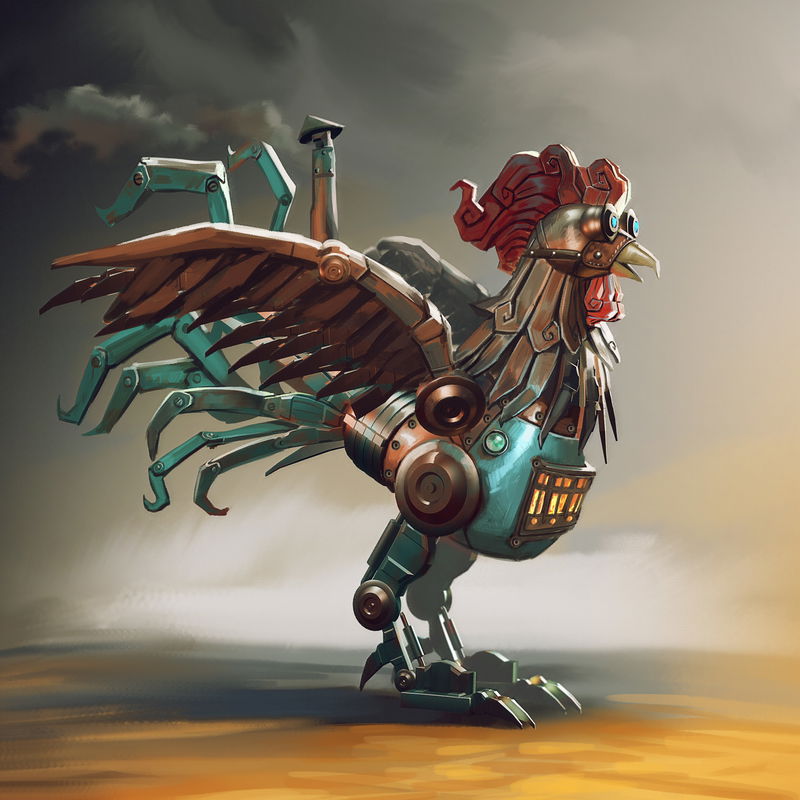
Musical Conceptualization: The music accompanying the Mecha-Rooster is energetic and highly rhythmic, featuring a background ostinato executed by the low strings (cellos and double basses) and woodwinds. Trumpets appear over the top with a simple melody emulating a rooster's "Cock-a-doodle-doo." We also hear the horns performing small rip or glissando effects. Finally, the oboes play high notes at the end of phrases, mimicking the clucking of a hen. The harmonic feel is quite chromatic, providing a sense of instability and danger.
Track Title: “L’amenaça emplomada”
Gameplay at 00:53:13 (or via the following link)
The Cook
Description: Second boss. A cook robotically modified to produce cakes more efficiently.
Design
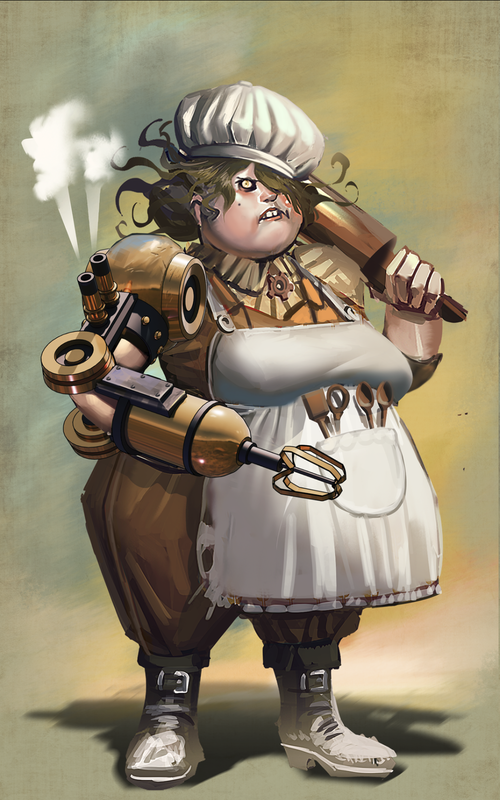
Musical Conceptualization: Although this is a serious and dangerous character, I decided to give her theme a more comedic approach. We find a minor blues harmony but at a quite fast tempo: 220 BPM. The accompaniment from the double bass (and later the tuba) is in half notes, playing the tonic and fifth, giving it a touch of burlesque chase music. We can also hear pizzicatos from the string section playing the off-beats, adding a bouncy and playful feel. The rhythm is lively; it's one of the few pieces in the OST where the drums are featured, playing a pop-rock beat (marking the kick on beats 1 and 3 with the bass, and the snare on 2 and 4).
The melody, performed by the cellos and trumpets (depending on the phase), is quite active, alternating between long, somewhat convoluted phrases and silent spaces to allow other instruments to participate in a call-and-response fashion.
The loop lasts 41 seconds and repeats indefinitely, with each of the 3 versions playing according to the phase you are in.Track Title: “La fúria ensucrada”
Gameplay at 01:32:16 (or via the following link)
The Shoemaker
Description: Third boss. The village shoemaker, a master craftsman condemned to manufacture shoes industrially with his new devices.
Design
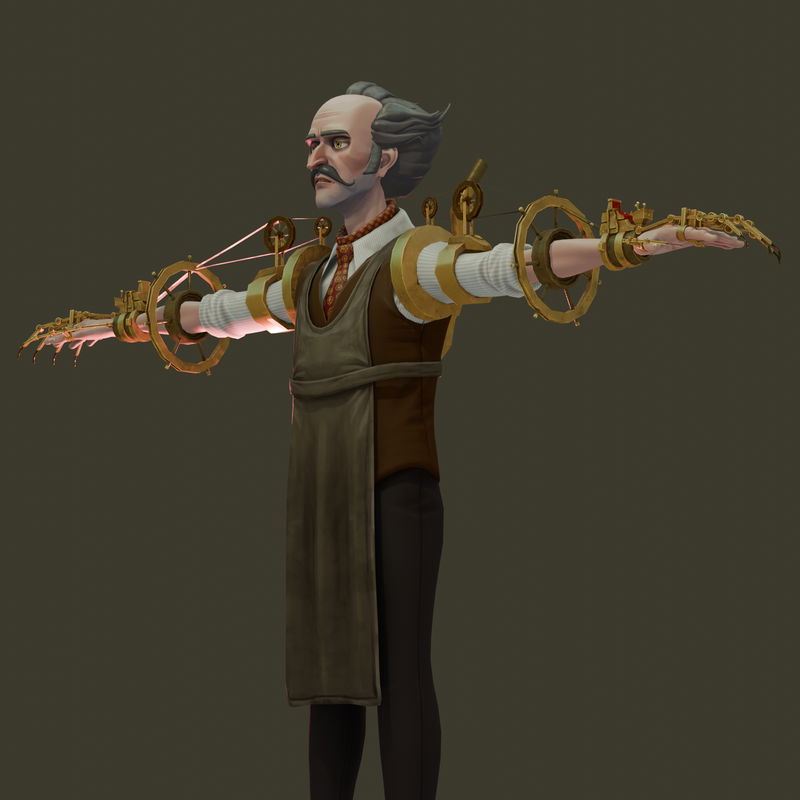
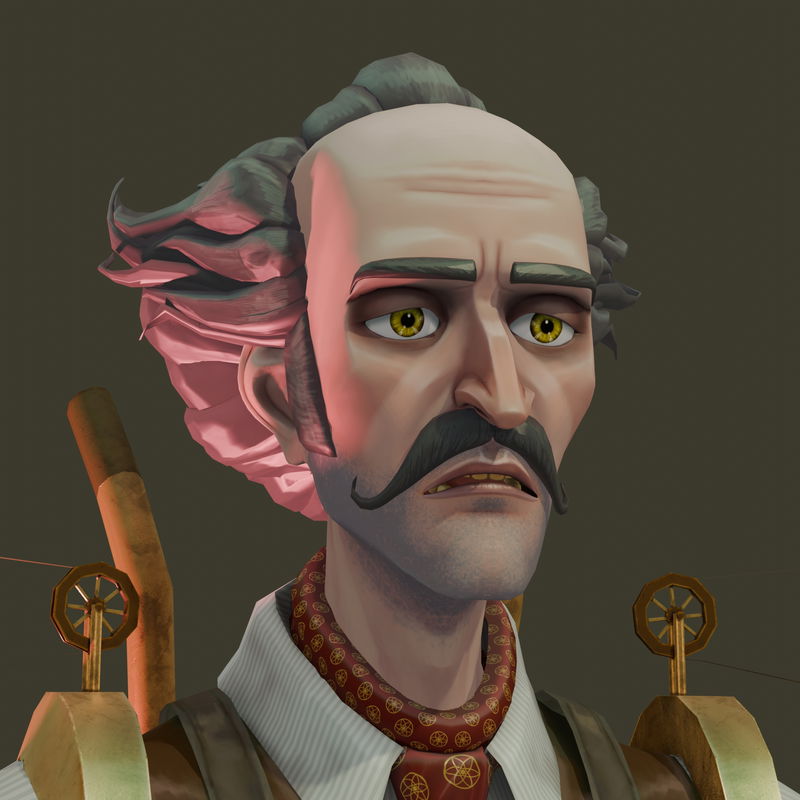
Musical Conceptualization: I decided this theme should be in 5/4, an irregular time signature, as I viewed the character's craftsmanship as something unique, exceptional, and different.
At the start, we find a clockwork-like gear formed by the double bass, harp, and tubular bells that set the base rhythm over which the piece is built. Later, cinematic percussion and a snare drum playing sharp rhythms appear, lending a military sound. The melody soon enters, played by the string section alongside horns, providing a sound that is both epic and warm.
In the next phase, we encounter a musical "game," a small technical whim I felt appropriate. The five-beat measure is split in half, forming two parts of two and a half beats. Each of these parts is "filled" by different rhythmic subdivisions (quarter notes, eighth notes, sixteenth notes), creating an even more complex mechanism that leads us from the second phase to the third, adding tension and drama to the combat.
The third phase of the piece is like the first, but with new timbral elements and a denser orchestration, taking the main melody to another level.Tubular bells are a percussion instrument in the idiophone family, consisting of suspended metal tubes that produce a sound similar to church bells or carillons. They are struck with mallets and are commonly used in orchestras.
Track Title: “Llustrat final”
Gameplay at 02:21:36 (or via the following link)
The Doll
Description: Fourth boss. A diabolical doll controlled by a manairona.
Design
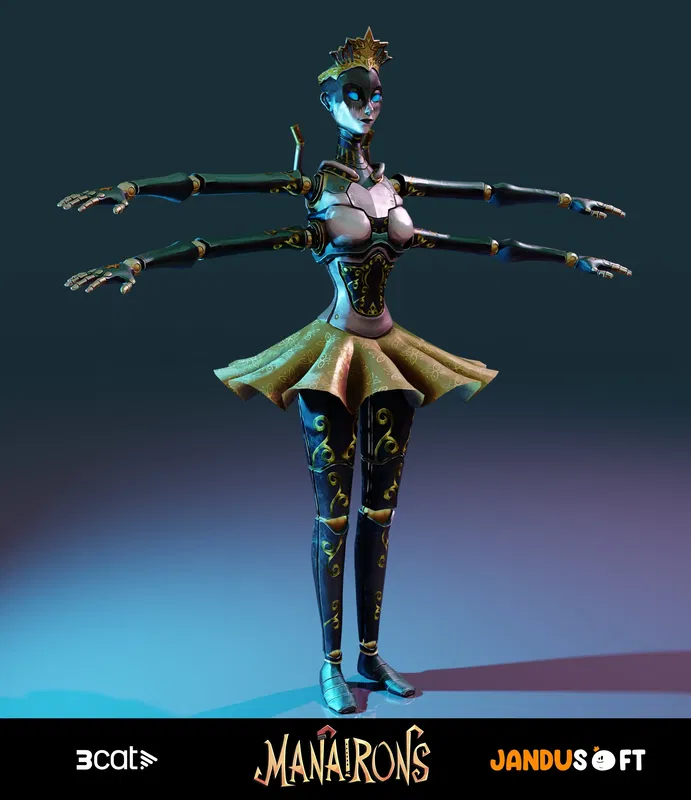
Musical Conceptualization: To accompany the battle with this boss, I thought a waltz rhythm would fit perfectly. The initial idea was to keep it in a classical style, 3/4 time, but it eventually evolved into something more modern, in 6/8 time.
Thus, in the choruses, we find the classical waltz rhythm in the first part and the modern one in the second.
The melody is cantabile and easy to remember, performed by the theremin (the instrument controlled without physical contact, consisting of two metal antennas that detect hand position to control frequency and volume) and the glockenspiel (a melodic percussion instrument).
For the harmony, I used one of the most popular composition techniques in film and video games: chromatic mediants. This technique—widely used by Danny Elfman, John Williams, and Howard Shore, as well as classics like Wagner, Mahler, and Strauss—consists of connecting major or minor chords a third apart with one common note. The harmony for this piece is:
Em - Cm - C#m - Em // E m - C m - C# m - E m
E minor (Em) and C minor (Cm) are chromatic mediants.Track Title: “El ball dels enginys”
Gameplay at 02:51:58 (or via the following link)
The Barber
Description: Fifth boss. An unidentified flying object with barber tools, piloted by a cranky manairó.
Design
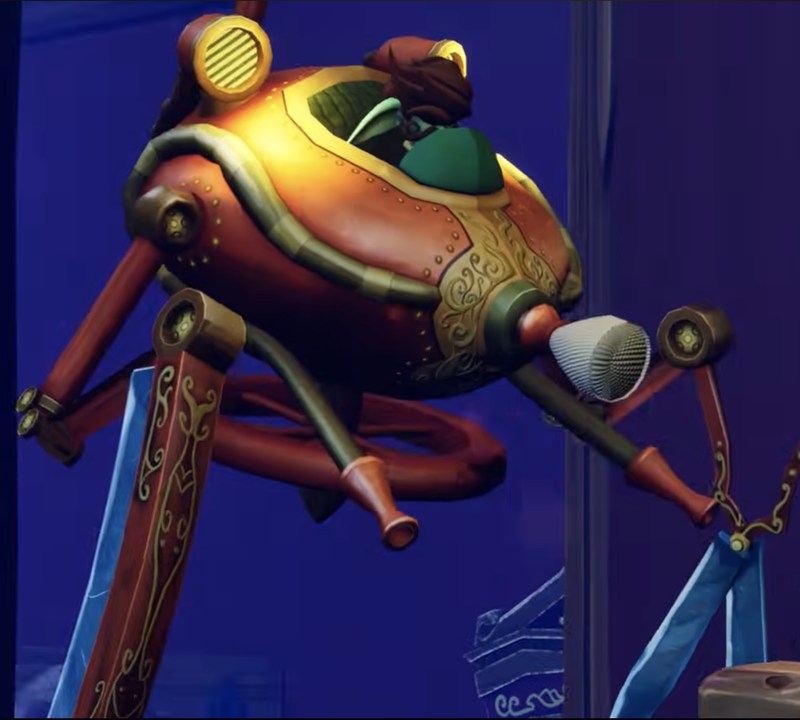
Musical Conceptualization: The music accompanying the fight against the Barber is more atmospheric than melodic. Unlike other bosses, there is no clear main melody from the start. Instead, the piece is built from textures and small musical gestures that generate a constant sense of tension.
The foundation is made of subtle percussive elements that mark the pulse of the scene, while the organ and accordion introduce small melodic lines and harmonic pads that provide a particular color to the theme. This combination creates a slightly unsettling and theatrical atmosphere, very much in keeping with the character's personality.
As the battle progresses, the music gains strength with the entry of brass and choirs, adding extra drama. Simultaneously, we hear an ostinato in the strings that introduces a more pronounced rhythmic subdivision, reinforcing the combat's energy and pushing the music into more intense territory.
The theme is designed to loop, but each cycle adds new elements: more percussion, more brass, more orchestral layers, harp, and additional effects. In this way, the music gradually increases the tension, always taking the scene one step further... until the final resolution of the battle.
Track Title: “Demà m’afeitaràs!”
Gameplay at 03:20:34 (or via the following link)
The Mayor
Description: The final boss. The mayor who has exploited the Manairons to over-industrialize the village.
Design
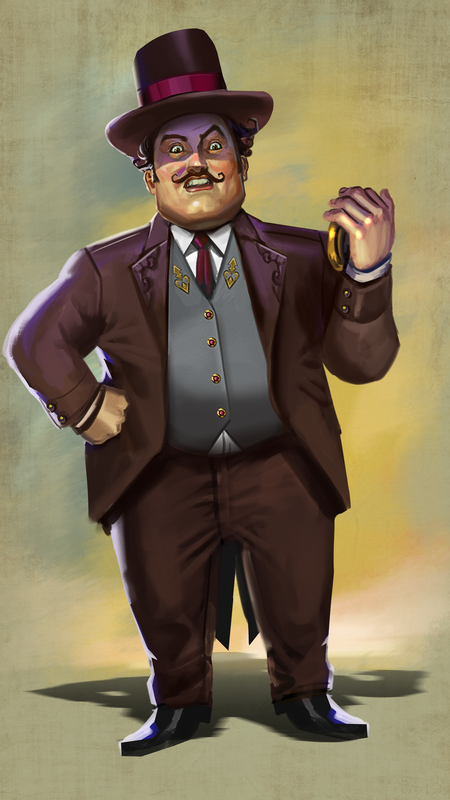
Musical Conceptualization: The Mayor is the final boss of the game, the character who triggered the events of the story. I wanted his theme to generate a sense of definitive confrontation, so it is structured into three clearly differentiated phases that follow the battle's evolution.
Phase 1
The first phase is built on an ostinato of organ and piano layered over intense percussion, establishing a firm and dramatic pulse from the outset. Over this foundation, a bass-like line performed by brass and low strings appears, reinforcing the imposing nature of the confrontation.
One of the most characteristic elements of this section is the choir, which first provides texture by singing a vowel ("ah") and later responds with the phrase "els manairons," performed with different voices evocative of a group of manairons singing in unison. Finally, the main melody appears, sung by the choir and reinforced by piano octaves, adding a sense of epic solemnity to the start of the fight.
Phase 2
In the second phase, the music introduces a dialogue between two melodies existing in counterpoint, generating a sense of call-and-response—a confrontation between good and evil, Manairó against Mayor.
The first line is performed by high voices, strings, and woodwinds, while the second is supported by low voices, cellos, double basses, and brass. This layering creates a denser and more dynamic texture, increasing musical tension as the battle intensifies.
Phase 3
The third phase accompanies the final moments of the fight and seeks to convey the feeling of an ultimate showdown.
Here, sixteenth notes appear in the organ over the percussion, with a character reminiscent of Baroque toccatas. This constant movement generates a sense of urgency and growing energy.
Later, the choir enters singing in Latin, with a highly dramatic melodic line that evokes the solemn tone of a liturgical text. The harmony tightens progressively until reaching the piece's crowning point, which leads into an organ trill, marking the musical climax of the final battle.
Track Title: “L’últim decret”
Listen to the track to hear the evolution more easily:
SPOILER
The Witch
Description: The "secret" boss. The witch who has guided you through your adventure.
Design:
Musical Conceptualization: The Witch is the secret boss that appears at the end of the game. Unlike the other confrontations, this fight works as a kind of rhythmic duel: the player must jump, block, or attack following the beat of the music through quick-time events.
For this reason, the music needed a more rhythmic and pronounced character, with an almost choreographic energy to help the player feel the pulse of the fight.
For this encounter, I opted for a more folk-oriented approach, seeking a sound that connected with the game's world and imagery.
The piece begins with an introduction featuring the leitmotif of the main theme, sung by a female choir as a presentation. This reference serves as a connection point with the rest of the soundtrack and anticipates the confrontation's special nature.
The theme's structure is based on three different sections that repeat three times, each time with fuller instrumentation and increasing intensity.
Phase 1
In the first section, we hear the leitmotif performed more rhythmically by a female choir. The melody becomes more dynamic and marked, providing an epic and energetic character that fits the combat's rhythmic mechanics.
Phase 2
The second section introduces a more relaxed contrast. Here, a melody performed by horns and oboe appears, supported by a string ostinato that maintains the movement and pulse of the piece, but with a more open and narrative atmosphere.
Phase 3
The final section recovers the momentum with a melody based on the town square theme. This line is answered by strings executing a fast phrase in counterpoint, creating a sense of musical dialogue symbolizing the closure of the town's story and the game's final resolution.
Throughout the repetitions, the instrumentation progressively enriches, reinforcing the combat's energy until reaching the final climax of this "secret" confrontation.
Track Title: “L’encís del canut”
Gameplay at 03:38:27 (or via the following link)
Conclusion
Composing music for bosses is one of the most stimulating moments in the soundtrack creation process. It is the space where music can exaggerate traits, intensify emotions, and transform a character's visual identity into sound.
In Manairons, every enemy provided a perfect excuse to explore different musical ideas: from unsettling textures and mechanical rhythms to more epic or theatrical moments.
Ultimately, each fight becomes its own little musical world that evolves with the battle and accompanies the player until the final moment of the clash.
And, in a way, each of these themes is also part of this story and the sonic portrait of this strange and chaotic village.
Comments
Molt bona feina, Víctor! Gràcies per explicar-ho tan bé i també de deixar-m'hi participar, encara que fos un trosset ben petit!
Gràcies a tu per l’interès i per participar amb la teva superguitarra elèctrica, li dona un toc únic al tema.